
Why It’s Time to Upgrade the Cafeteria
If you’re going to redesign one space in a middle or high school, make it the cafeteria. Hands down, it delivers the biggest return on investment.
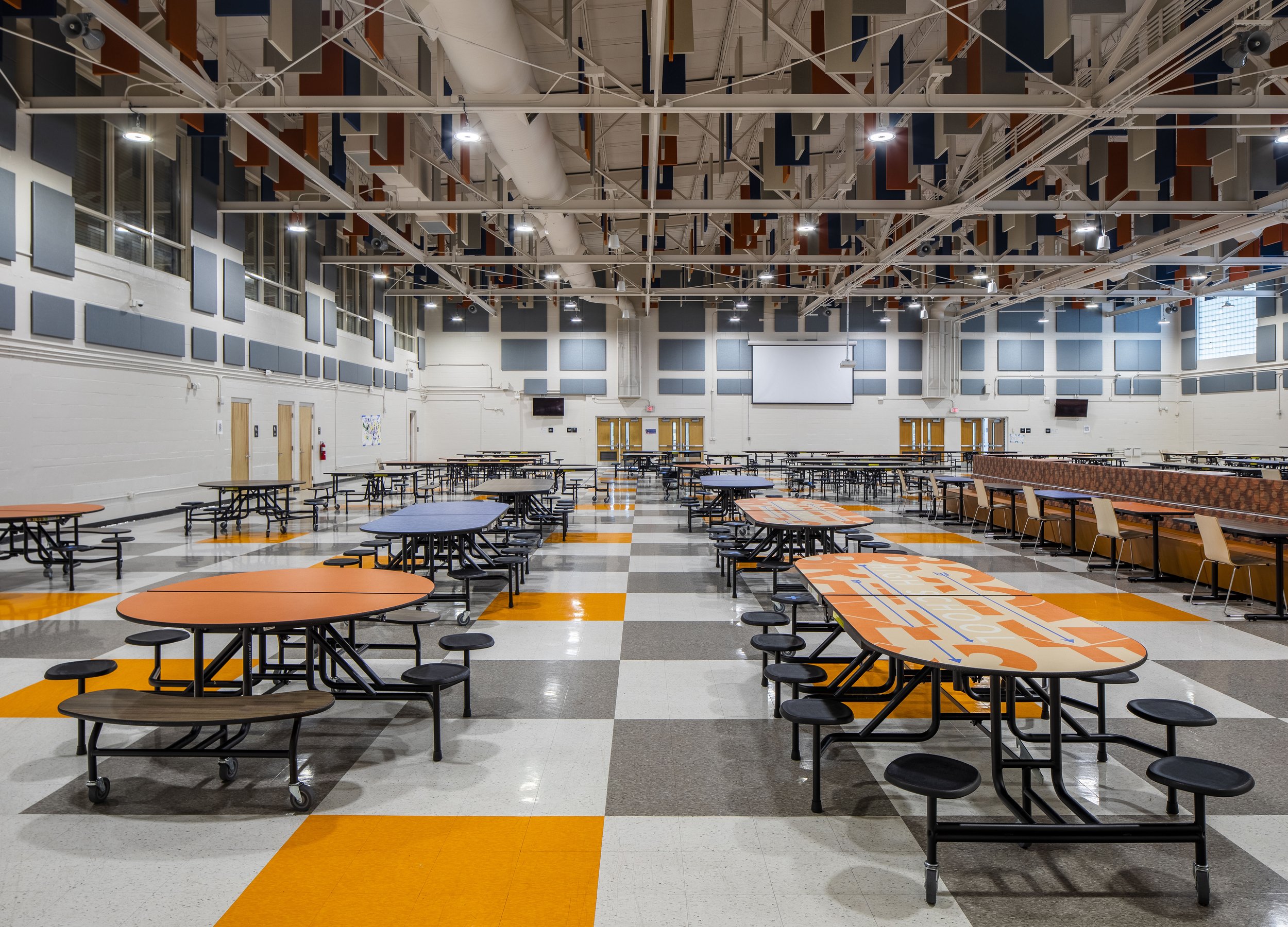
The cafeteria isn’t just where kids eat anymore, it’s one of the few places on campus where students and staff naturally come together. When the space is comfortable, flexible, and actually looks good, it becomes way more than a lunchroom. Think collaboration hub by day, club meeting spot after school, and a welcoming space for family and community events in the evening.
A well-designed cafeteria can flex throughout the day: food and beverage service, tech-enabled collaboration zones, open gathering areas, and tables that work just as well for studying as they do for lunch. In short, it becomes the heart of the campus.
Design That Supports Learning
Cafeteria renovations aren’t just about aesthetics — thoughtfully designed spaces are being used to recognize students for their academic impact, too. Designated seating areas can be used to reward student achievement, whether that’s strong academics, perfect attendance, or positive behavior. Schools set the criteria, and students who meet it earn access to premium seating zones, such as booths, soft seating with tables for relaxing and eating. Motivation, but make it design-forward.
Teachers also love having an alternative to the classroom. Soft seating arranged in a U-shape with a central table, surrounded by high-top seating or desk areas, gives students a more focused, semi-private place to collaborate. Add mobile Smart Boards and shared screens, and suddenly the cafeteria doubles as a dynamic learning environment.
What Administrators Are Seeing
School administrators consistently report unexpected wins after cafeteria renovations:
Cleaner spaces: Students take pride in updated environments and tend to sit in the same areas each day. One school even ropes off uncleaned tables the following day. Students quickly learn to clean up after themselves. Less mess, easier cleanup.
Built-in recognition: “Luxury” seating areas — soft seating separated from the main dining space — are used to reward students for achievement, attendance, or good behavior. The administrators in one school use the designated area for seniors and they keep the area spotless, or they lose the privilege.
Better behavior overall: Thoughtful spatial design matters. Clear sight lines, adequate walkways, and smart seating layouts make supervision easier and reduce behavior issues during mealtimes. With the right planning, schools can even increase seating capacity without increasing chaos.
Bottom line: better design leads to better behavior.
Planning a new school? Run, don’t walk, to the table
If your district is planning a new middle or high school in the next three to five years, this is the moment to think bigger about the cafeteria.
Most districts already allocate funds for cafeteria Furniture, Fixtures, and Equipment (FF&E). In some cases, foodservice programs have been allowed to utilize those funds to upgrade the design, and the results are powerful. When foodservice teams collaborate with students, administrators, and teachers, the cafeteria becomes a space everyone feels ownership over.
One district took this approach and saw walls filled with school branding, student-designed art, and inspirational messaging. Teachers helped design tables as collaboration stations equipped with technology. The school’s marketing class even led the cafeteria’s re-launch, positioning it as a place to eat, gather, and genuinely hang out.
The outcome? A cafeteria so successful that the district superintendent requested similar upgrades across all high schools!

ABOUT THE AUTHOR

Lora spent nearly 20 years as the Senior Director for the Orange County Public Schools (OCPS) Food and Nutrition Program in Orlando, Florida. During her tenure, she tripled the meals served to one million every five days. During the pandemic, OCPS served 46 million meals, an increase of 28% from the 2019 school year.
Lora's extensive accomplishments at OCPS inform her current work with ProTeam where she is passionate about helping to empower nutrition professionals to improve access to school meals.