
A SWEETER FUTURE: Preparing for the 2027 Added Sugars Requirements in School Meals
A proactive approach today creates healthier opportunities for students tomorrow.
As school nutrition programs continue to evolve, the upcoming added sugars requirements represent another important step in our shared mission to serve nutritious, appealing, and high-quality meals to students. With the next phase of USDA's updated nutrition standards taking effect July 1, 2027, now is the time for school nutrition professionals and food service directors to evaluate current menus, identify opportunities for improvement, and prepare for successful implementation.
The goal isn't simply to meet another federal requirement. It's an opportunity to build upon the progress already made in school nutrition and create menus that support students' health, wellness, and success in the classroom.
What's Changing in 2027?
Under USDA's final rule, Child Nutrition Programs: Meal Patterns Consistent With the 2020–2025 Dietary Guidelines for Americans, the National School Lunch Program (NSLP) and School Breakfast Program (SBP) will implement a weekly added sugars limit beginning July 1, 2027. Beginning with the 2027–2028 school year, the average amount of added sugars in meals offered must be less than 10% of total calories across the school week for each applicable age/grade group. This requirement applies to both breakfast and lunch and will be in addition to the product-specific added sugars limits that became effective July 1, 2025.
USDA has not yet released its next proposed rule, but based on the latest Dietary Guidelines, we expect it will address added sugar substitutes and further reduce the added sugars allowed in school meals.
A Quick Refresher: Current Product-Specific Limits (this section might not be needed)
School nutrition professionals should already be evaluating products against the following requirements:
Breakfast cereals: No more than 6 grams of added sugars per dry ounce.
Yogurt: No more than 12 grams of added sugars per 6 ounces (equivalent to 2 grams per ounce).
Flavored milk: No more than 10 grams of added sugars per 8 fluid ounces. A separate limit of 15 grams per 12 fluid ounces applies to flavored milk sold as a competitive food in middle and high schools.
The 2027 weekly limit adds another layer of accountability, requiring programs to look beyond individual products and evaluate the overall added sugars contribution of their weekly menus.
Time to Take a Closer Look at Current Menus
While the product-specific limits have already prompted many programs to make purchasing and menu adjustments, the upcoming weekly limit calls for a broader approach to menu development. Breakfast menus, in particular, may offer opportunities for meaningful reductions. Sweetened cereals, pastries, grain-based desserts, flavored milk, sweetened yogurt, syrups, and other toppings can contribute added sugars throughout the week. Rather than waiting until the 2027 implementation date, consider using the coming months to assess current offerings and gradually introduce alternatives that students will enjoy.
Here are a few opportunities to consider:
Rethink breakfast offerings. Explore lower-added-sugar cereals, whole-grain breakfast options, breakfast sandwiches, eggs, and other savory choices. Incorporating additional protein-rich options can help diversify menus while maintaining student appeal.
Evaluate flavored milk selections. Continue offering appealing milk choices while ensuring products meet the established added sugars limits. Consider how milk selections contribute to the overall weekly added sugars calculation.
Review yogurt and parfait offerings. Choose compliant yogurt products and explore ways to incorporate fresh or frozen fruit to provide natural sweetness and variety.
Take a fresh look at condiments and toppings. Syrups, sweetened fruit toppings, spreads, and sauces can contribute to added sugars throughout the week. Consider offering fresh fruit, cinnamon, and other flavorful alternatives.
Build variety into lunch menus. Evaluate sweetened sauces, dressings, grain-based desserts, and other menu items that may contribute added sugars. Look for opportunities to balance the weekly menu with flavorful, nutrient-rich choices.
Don't Forget the Nutrition Facts Label
One of the most important tools available to menu planners is the Nutrition Facts label. As programs evaluate products and make purchasing decisions, understanding the distinction between total sugars and added sugars is essential.
Total sugars include naturally occurring sugars found in foods such as milk and fruit, as well as added sugars. The added sugars line identifies the sugars incorporated during processing or preparation. When reviewing products, pay particular attention to the “Includes Added Sugars” line rather than relying solely on total sugars.
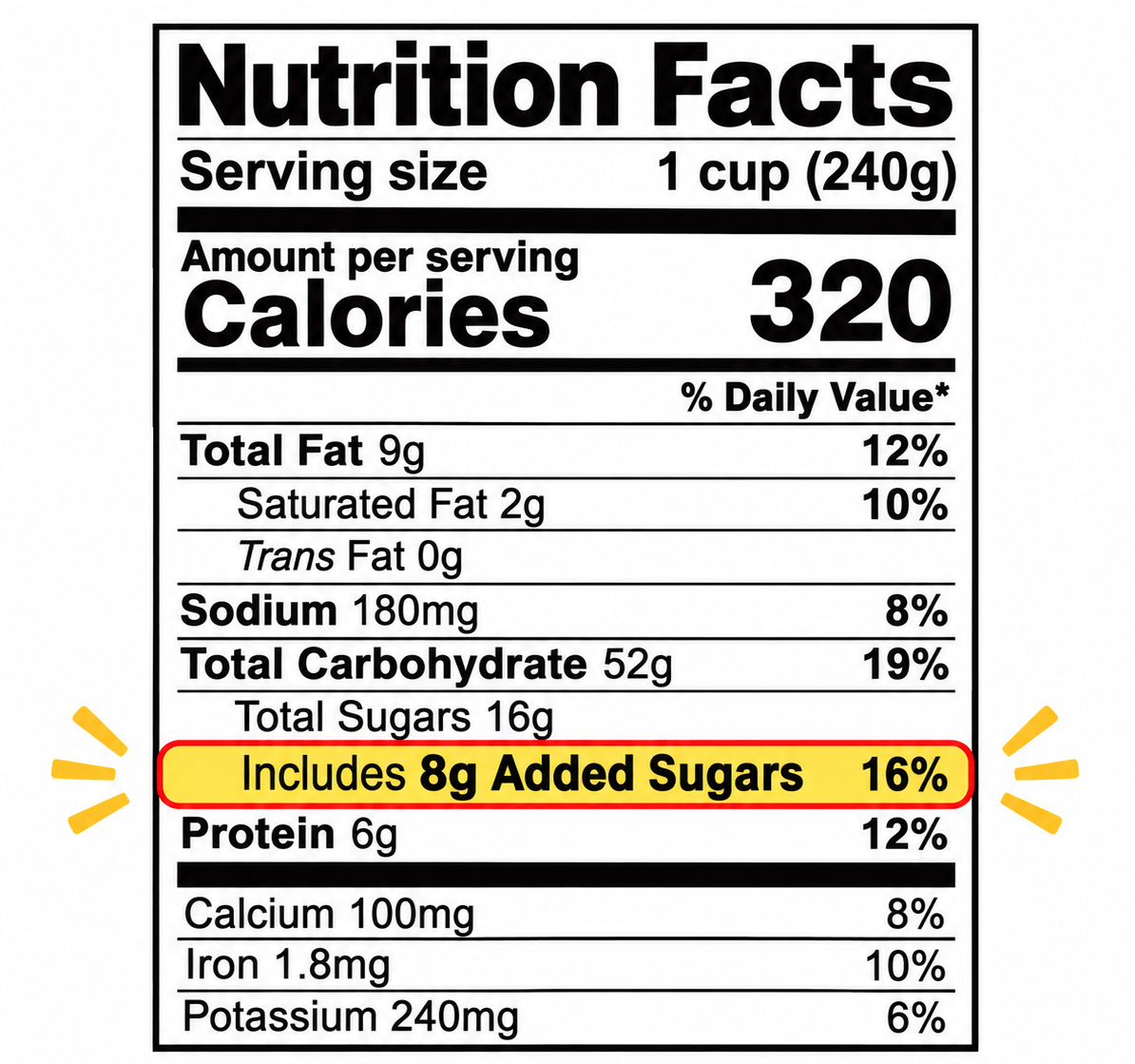
This simple step can help purchasing teams, menu planners, and food service directors make more informed product selections and identify opportunities to reduce added sugars across the menu.
Start Preparing Now: A Practical Approach
Successful implementation begins with preparation. Consider incorporating the following steps into your menu planning process:
Analyze current menus. Review breakfast and lunch menus by age/grade group to identify foods contributing the greatest amounts of added sugars.
Review product specifications. Work with vendors and manufacturers to obtain updated Nutrition Facts labels and product information.
Evaluate weekly contributions. Begin calculating the percentage of weekly calories coming from added sugars to identify gaps before the implementation deadline.
Test new products and recipes. Introduce lower-added-sugar alternatives and gather student feedback before making permanent menu changes.
Collaborate with your team. Engage purchasing staff, menu planners, school nutrition managers, and vendors in the transition. If you need additional menu support along the way, our School Menu Solutions™ service is worth a look.
Monitor and adjust. Use menu production records, nutrient analysis software, and product documentation to evaluate progress and make adjustments as needed.
Moving Forward Together
School nutrition professionals have always balanced multiple priorities: meeting federal requirements, managing budgets, navigating supply chains, and most importantly, serving meals that students want to eat.
The 2027 added sugars requirements provide an opportunity to continue that important work with a renewed focus on the nutritional quality of our menus. Change doesn't have to happen all at once. Small, intentional adjustments today can make a meaningful difference in our readiness for tomorrow. Our mission remains the same: serving meals that nourish students, support lifelong healthy habits, and help every child succeed.
ABOUT THE AUTHOR

Jessica is a registered dietitian with more than 15 years of experience in nutrition and foodservice. Prior to joining ProTeam, Jessica provided child nutrition oversight as a district-wide School Nutrition Coordinator in Northern Virginia. She also has experience as a Registered Dietitian working as a Clinical Nutrition Manager and Director of Food & Nutrition Operations.